Introduction to the CCAM Employment & Skills Observatory
The rise of Connected, Cooperative and Automated Mobility (CCAM) is transforming the way people and goods move across Europe. But beyond smarter vehicles and digital infrastructure, CCAM is driving a transformation of jobs, skills, and careers in the transport sector and beyond.
ReSKILLING 1st Annual Virtual Stakeholder Event: discussions and presentations
The RESKILLING Annual Virtual Stakeholder Events are great opportunities for stakeholders interested in the deployment of Cooperative, connected and automated mobility (CCAM) to come together and discuss needs and potential collaborations related to skills development.
Taxonomy of skills for CCAM workforce transformation
CCAM (Cooperative, connected and automated mobility) will significantly reduce traditional driving roles while creating new positions in remote operations, fleet orchestration, and customer-facing services.
ReSKILLING at the 25th International Conference “Reliability and Statistics in Transportation and Communication” (RelStat-2025)
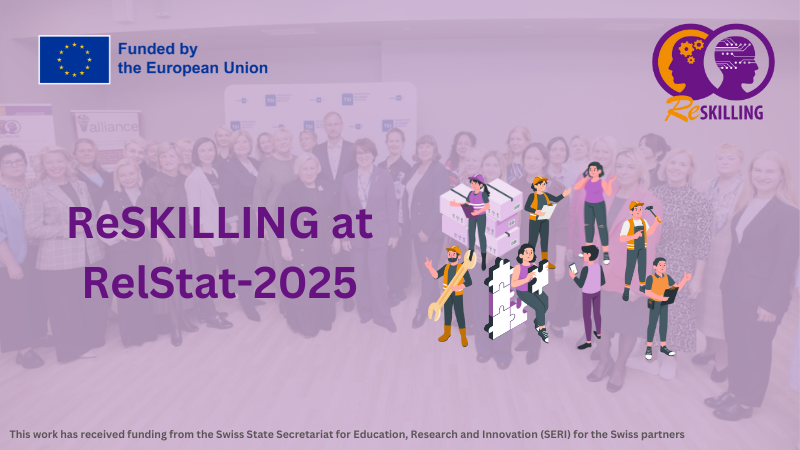
Within the framework of the 25th International Conference “Reliability and Statistics in Transportation and Communication (RelStat-2025)”, a thematic workshop titled “Knowledge Transfer” was organized by Transport and Telecommunication Institute (TSI) and the Association “Women in Transport” (Latvia).
Why workforce matters in CCAM: the WE-TRANSFORM policy agenda
When it comes to CCAM, technology is one aspect, but many other aspects are equally important. To properly manage the various potential impacts of CCAM, the social effects of automation are of paramount importance and require an appropriate transition of the workforce and the education system.
More Articles …
Page 2 of 4