Lessons learnt during the CCAM-ERAS final event
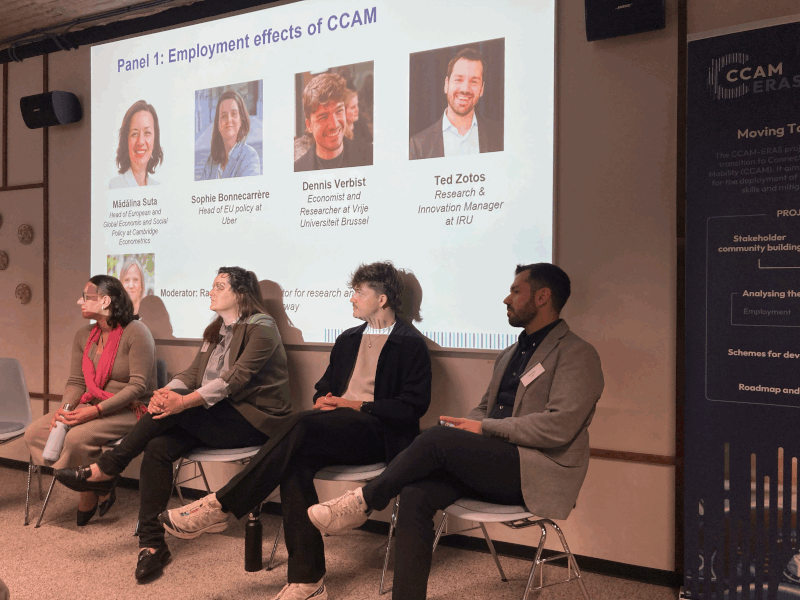
Yesterday, the CCAM-ERAS final event in Brussels brought together researchers and practitioners to reflect on the employment implications of automated mobility, with a strong focus on the social dimension of transition.
Following an insightful presentation on the project’s employment impact tool, a panel discussion featured Sophie Bonnecarrère (Head of EU Public Policy at Uber), Ted Zotos (IRU), and Dennis Verbist (Vrije Universiteit Brussel), representing the ReSKILLING project.
Dennis focused on equity and just-transition considerations linked to CCAM deployment.
He highlighted a recurring structural issue: workers most exposed to automation are often not those best positioned to move into emerging roles, increasing the risk of labour-market mismatch. He also underlined that many transport occupations imply substantial practical expertise, even when not formally classified as highly skilled, particularly for professional drivers operating in complex environments.
The discussion reinforced a clear conclusion: reskilling cannot rely on generic mobility between occupations, but requires targeted pathways grounded in real skill transfer and sector-specific realities. At ReSKILLING, VUB is currently conducting a cost-benefit analysis to quantify the effects of CCAM on the workforce.